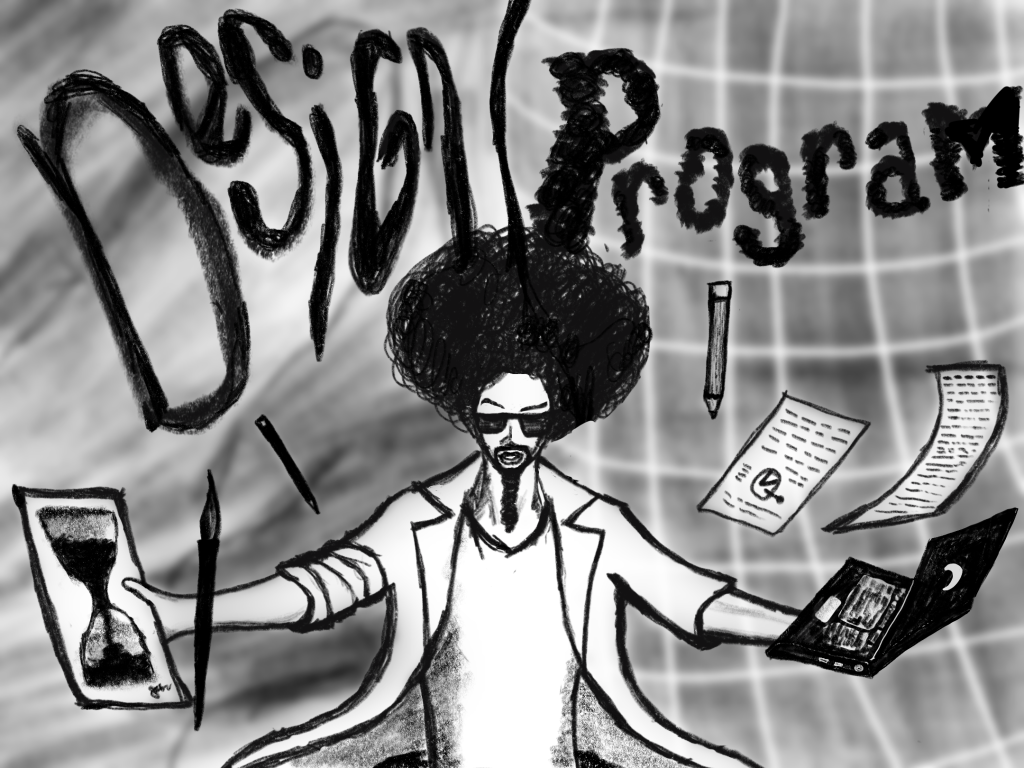
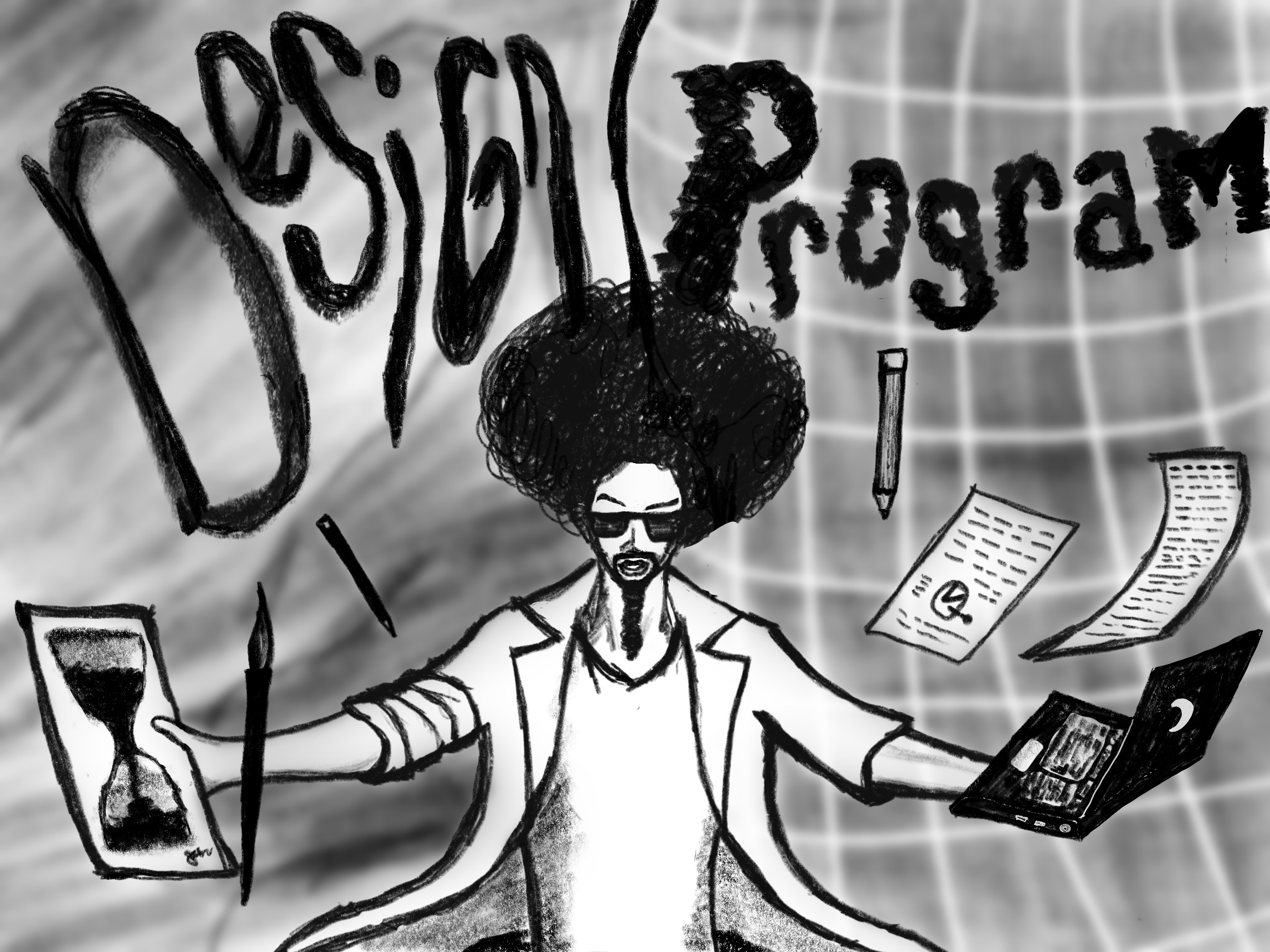
When we think of God as a designer, it evokes an image of artistry, an omnipotent creator crafting beauty and experience with intention and care. When we say God is a programmer, the conversation shifts to the technical genius behind it all. Sure, God might have a knack for design but behind the scenes there’s an intricately coded system running the show, a grand program that governs life itself.
The debate between whether God is primarily a designer or a programmer isn’t just philosophical, it reflects the very nature of reality itself. Design shapes our experience, while programming is the engine driving it all. To explore this, let’s dive into the mechanics of sight, touch and the pursuit of emotions that we can never truly replicate through technology.
How Your Eyes Work vs. Photoshop and Graphics Tools
Your eyes are among the most sophisticated “cameras” in existence. They take in light, filter through layers of cells and receptors and send electrical signals to your brain. Your brain, in turn, processes that information to form a coherent, three-dimensional image of the world around you, one that is rich with color, depth and clarity far beyond what even the best technology can replicate. Life itself is in the highest definition and no graphics card can create an experience that matches the sharpness and fluidity of simply seeing the world,just yet.
Even with all of our advances in tools like Photoshop where we manipulate pixels and adjust lighting, we’re still only scratching the surface. Sure, we can create near-perfect visuals but what we’re really doing is trying to imitate the original design. It’s here where the comparison of God as a designer becomes clear. The world we see is the result of an unfathomably complex design, while the tools we use to recreate that experience, whether it’s digital or mechanical, are still merely mimicking what already exists.
We design by copying.
God designs by creating.
Programming Reality
Furthermore, touch and the sense of feeling are perhaps even more intricate. When you touch something, your brain processes electrical signals through your nervous system, interpreting sensations like temperature, texture and pressure. This process happens so fast that you don’t even think about it but the complexity behind how it all works is staggering. This is God’s programming in action: a perfect system designed to allow you to experience the physical world.
Now, with programming and engineering, we’ve begun to replicate some aspects of touch. Technologies like haptic feedback allow users to feel sensations while interacting with virtual environments. Engineers have even developed robotic prosthetics that can mimic the sensation of touch by sending electrical impulses to the brain but despite these advancements there’s still something missing.
We can mimic the sensation but the emotion tied to touch, the warmth of holding a loved one’s hand or the softness of a gentle breeze on your skin eludes us and that’s where God as a designer shines once again. The feeling isn’t just about sensation; it’s about the meaning behind the sensation. Touch can comfort, excite or ground you in a way that no robot or program has been able to replicate.
Chasing the Irreplaceable
While technology is closing the gap in visuals and touch, emotions and sentience are what truly separate God’s design from our best efforts as programmers. Emotions are complex, messy and unpredictable. A fast-beating heart could mean terror to one person and joy to another. It’s the nuance of feeling that remains irreplaceable, a beauty and a horror that we, as creators and programmers can’t quite capture.
Take music for example, we can design algorithms to create melodies that mimic human composition but we can’t program the feeling music evokes. That moment when a song swells and sends chills down your spine or when a lyric hits so hard that you feel seen, understood, maybe even transformed, that’s God’s design at its most profound. There’s a sentience in the experience of music that surpasses anything artificial intelligence can yet achieve. The emotions, the memories it stirs are tied to what makes us human, not to the technical components of sound waves and frequencies.
Manipulation and the Simulation of Feeling
Now for the twist, even though we can’t replicate emotions, we’re pretty good at manipulating them. The digital age has created a new kind of experience, one where algorithms and programming influence how we feel often without us realizing it.
Take scrolling through social media, for example, It’s a cycle of highs and lows engineered to keep you hooked. You might start out in a slump, bored and disengaged but then you scroll across something that grabs your attention and just like that you are hit with a small dose of dopamine that invokes a sense of false happiness but the moment quickly passes yet there you are, scrolling, searching for your next hit.
This manipulation is a form of programming, but it’s not real emotion. It’s a simulation, one that tricks the brain’s algorithms into thinking you’re feeling something authentic. The unquestionable yet complex beauty of human emotion is still beyond our reach as programmers.
Feeling as the Ultimate Design
As we continue to advance in technology, creating more realistic visuals and tactile sensations, the one thing we keep chasing is the true human experience.
You would think that that’s where the argument ends, right?
God is a designer, not just of what we see and touch but of what we feel. Our emotions, sentience, the way our hearts race for joy or sink with fear, that’s God’s ultimate design. It’s the one thing we, as programmers, can simulate but never truly replicate. We can trick the brain into thinking it’s feeling something real but we can’t replicate the exact beauty of a genuine smile, a tear or a moment of pure connection.
Design vs. Programming
So, is God a designer or a programmer? The truth is, God is both, but where we as programmers excel in creating systems and mimicking experiences. God’s true genius lies in design. The universe is programmed with laws and rules, just like a machine but it’s the experience, the feeling of life itself, that makes it all real.
We can create visuals that look nearly perfect and sensations that feel almost authentic, but the richness of life, love, pain, joy and heartache is a design feature, not a bug. It’s the one thing that no amount of code or algorithms will ever truly replace.
God is a designer, and we’re just playing catch-up.